If you've spent any time looking for homeschool ideas, you may have heard the word gameschooling. So what is gameschooling?
It's simply using games as part of your child's learning.
It might mean playing Yahtzee instead of doing another page of math problems. You might pull out Scrabble for some spelling and vocabulary learning or play Ticket to Ride while you're learning about geography. Sometimes the game connects directly to something you're studying, and sometimes you simply play because everyone needs a change from the regular homeschool routine.
There really isn't one right way to do it.
What Can Kids Learn Through Gameschooling?
This is where gameschooling gets interesting because there's always more learning happening than we realize when we play games.
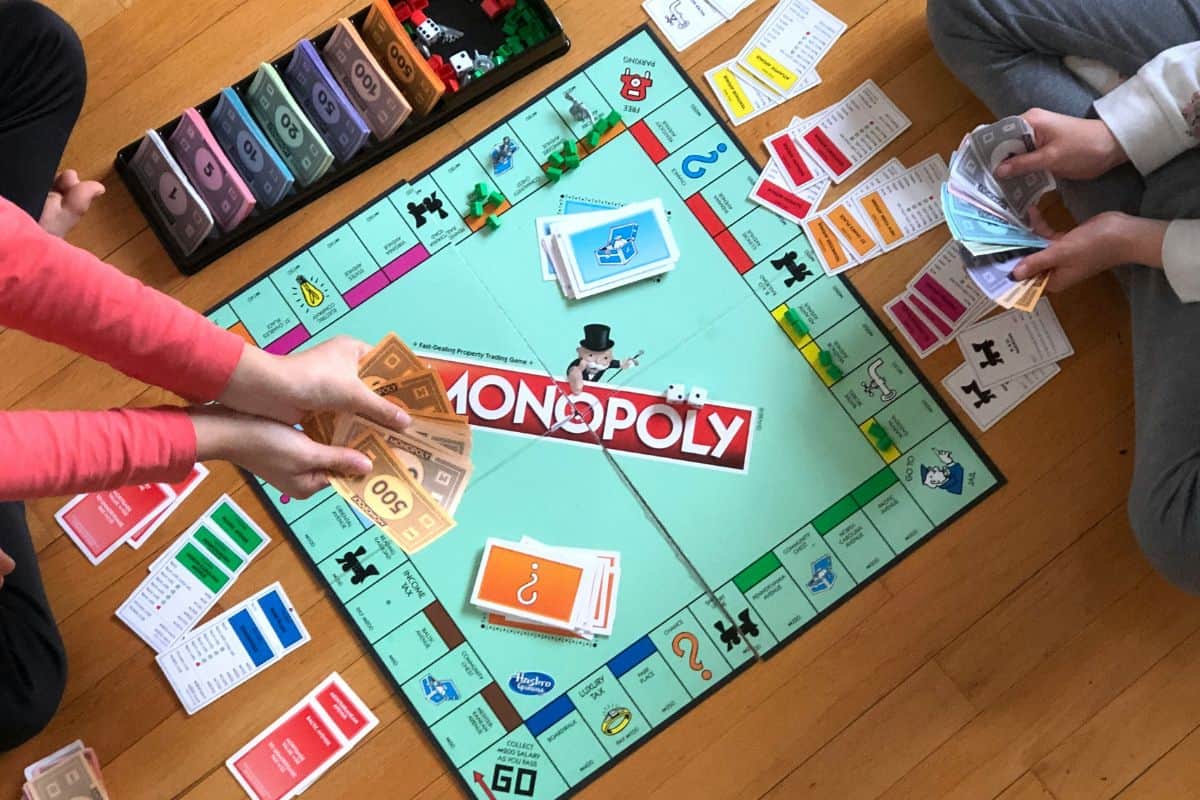
Take a regular game of Monopoly for instance. Kids are counting money, adding and subtracting, comparing prices, making change, and deciding whether they should spend or save.
With Scrabble, they're working with letters, spelling words, reading, adding points, and thinking about vocabulary.
Even a simple game of Uno gives kids practice with colors, numbers, matching, taking turns, and following directions.
Depending on the games you choose to play, kids can practice:
- Math and number sense
- Addition and subtraction
- Money skills
- Reading
- Spelling and vocabulary
- Geography
- Colors and shapes
- Patterns and sequencing
- Logic
- Strategy
- Memory
- Critical thinking
- Problem-solving
- Communication
And that's before we even get into all the things kids learn from simply playing a game with someone else.
Benefits of Gameschooling
Instead of answering a math problem because it's printed on a worksheet, they're adding numbers because they need to know their score. They're reading because they need to understand a card. They're counting money because they want to buy a property.
Games can also give everyone a break from the usual homeschool routine. If you've had one of those mornings when everyone is tired of worksheets, workbooks, or computer work, playing a game can bring everyone back to the table without feeling like you're forcing another lesson.
Gameschooling can also:
- Add more screen-free activities to your day
- Give kids hands-on practice as they learn
- Encourage problem-solving in a variety of different ways
- Build confidence with skills they're practicing
- Help kids practice following directions
- Add more family time to the homeschool day
Does Gameschooling Mean You Only Use Games?
For many homeschool families, games are simply another tool. You might do your regular math lessons Monday through Thursday and play a math game on Friday to change up the learning routine.
You can use games as much or as little as you want to.
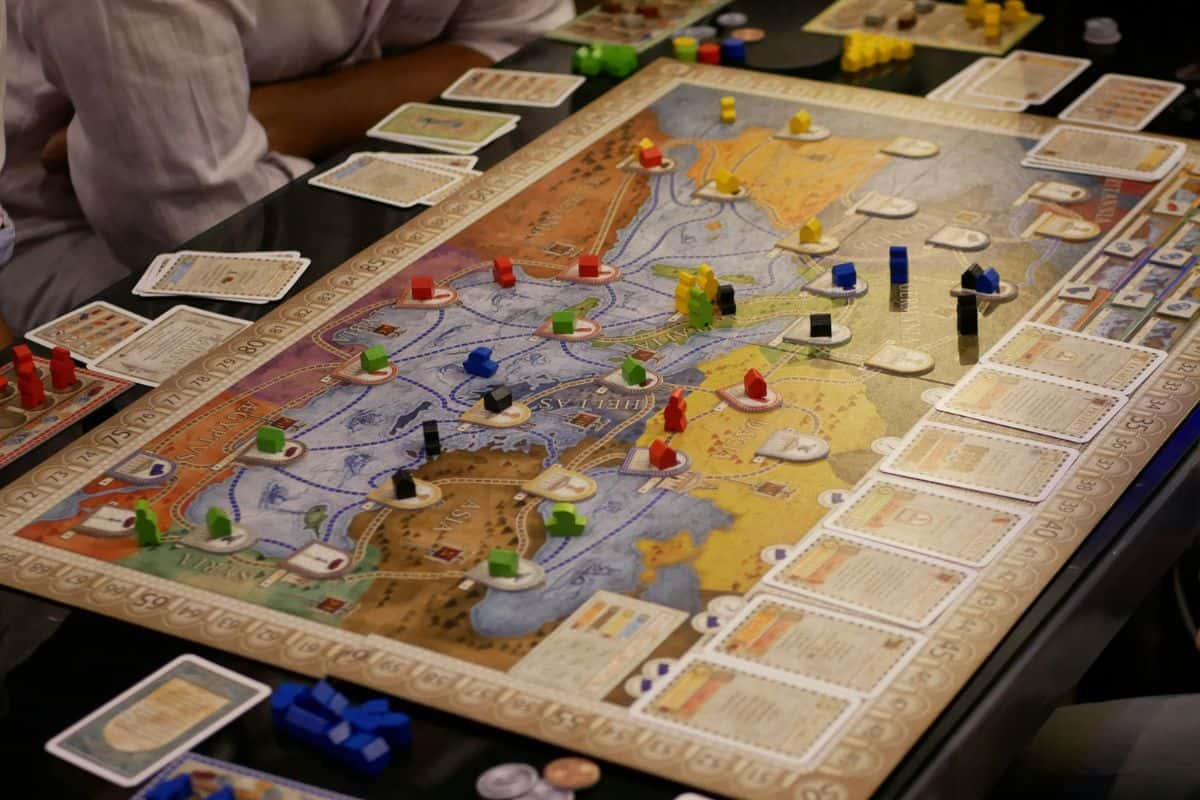
What Are Some Good Games for Gameschooling?
The best games will depend on your children's ages, interests, and what you'd like them to practice.
Some families might want more math games. Others may be looking for spelling games, geography games, logic games, or games younger siblings can play too.
A few familiar games to start with include:
- For math: Yahtzee, Monopoly, Rummikub and Sum Swamp
- For spelling and vocabulary: Scrabble, Boggle and Bananagrams
- For geography: Ticket to Ride
- For logic and critical thinking: Clue, Chess, Sequence, Blokus and SET
- For younger kids: Uno, Zingo!, Spot It! and Hoot Owl Hoot!
I've also put together a bigger list of 25+ educational board games, including exactly what kids can learn and practice while playing each one.